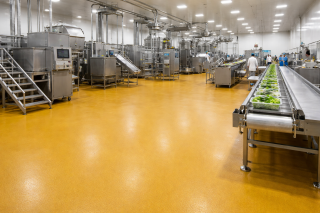
Zenith Flooring installs slip-resistant resin systems, anti-slip coatings and specialist tile treatments across commercial and industrial environments throughout the UK.
Each solution is selected around the existing surface, expected contamination, pedestrian and vehicle traffic, cleaning requirements and the level of texture the area needs – not simply whether the floor feels slippery when dry.

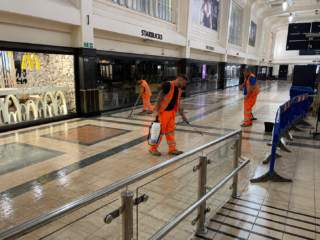
Slip risk often develops where large numbers of people move through entrances, concourses, aisles, circulation routes and changes in level. Rainwater carried indoors, routine cleaning, food and drink spillages or smooth worn finishes can all reduce grip, particularly during busy periods when the floor must continue to look presentable and remain practical to maintain. In more operational environments, the challenge may come from water, grease, oil, process residues or frequent washdown. These floors may require a more pronounced texture and a heavier-duty system capable of withstanding cleaning, wheeled traffic and repeated contamination.
Zenith Flooring assesses the surface, the way the area is used and the conditions most likely to affect it before recommending a solution. This may involve upgrading an existing floor with an anti-slip resin coating, installing a textured resin system or treating compatible tiles and stone where full replacement would be unnecessary.
The aim is not simply to create the roughest possible finish. It is to deliver the appropriate balance of grip, durability, appearance and cleanability for the people using the space.
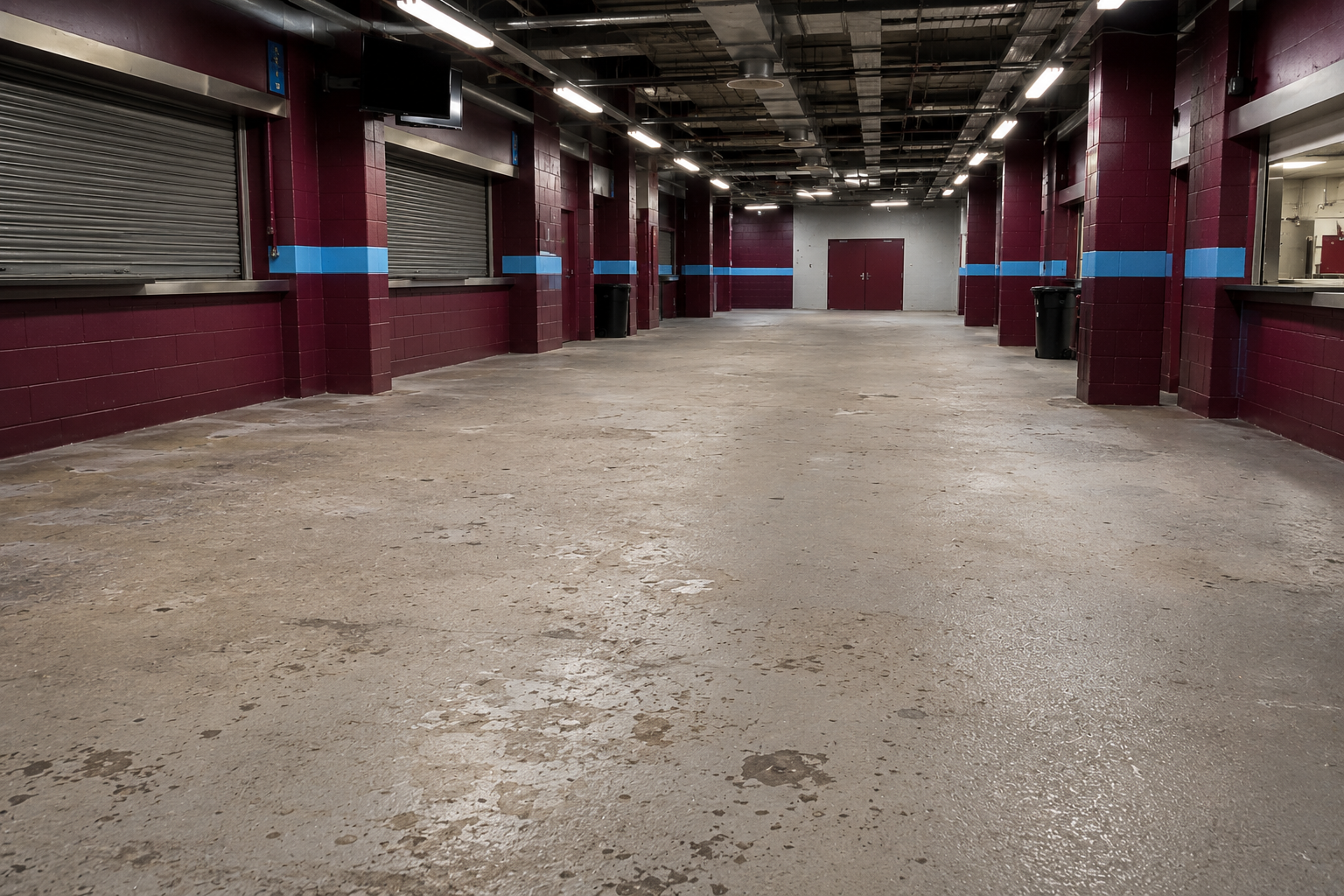
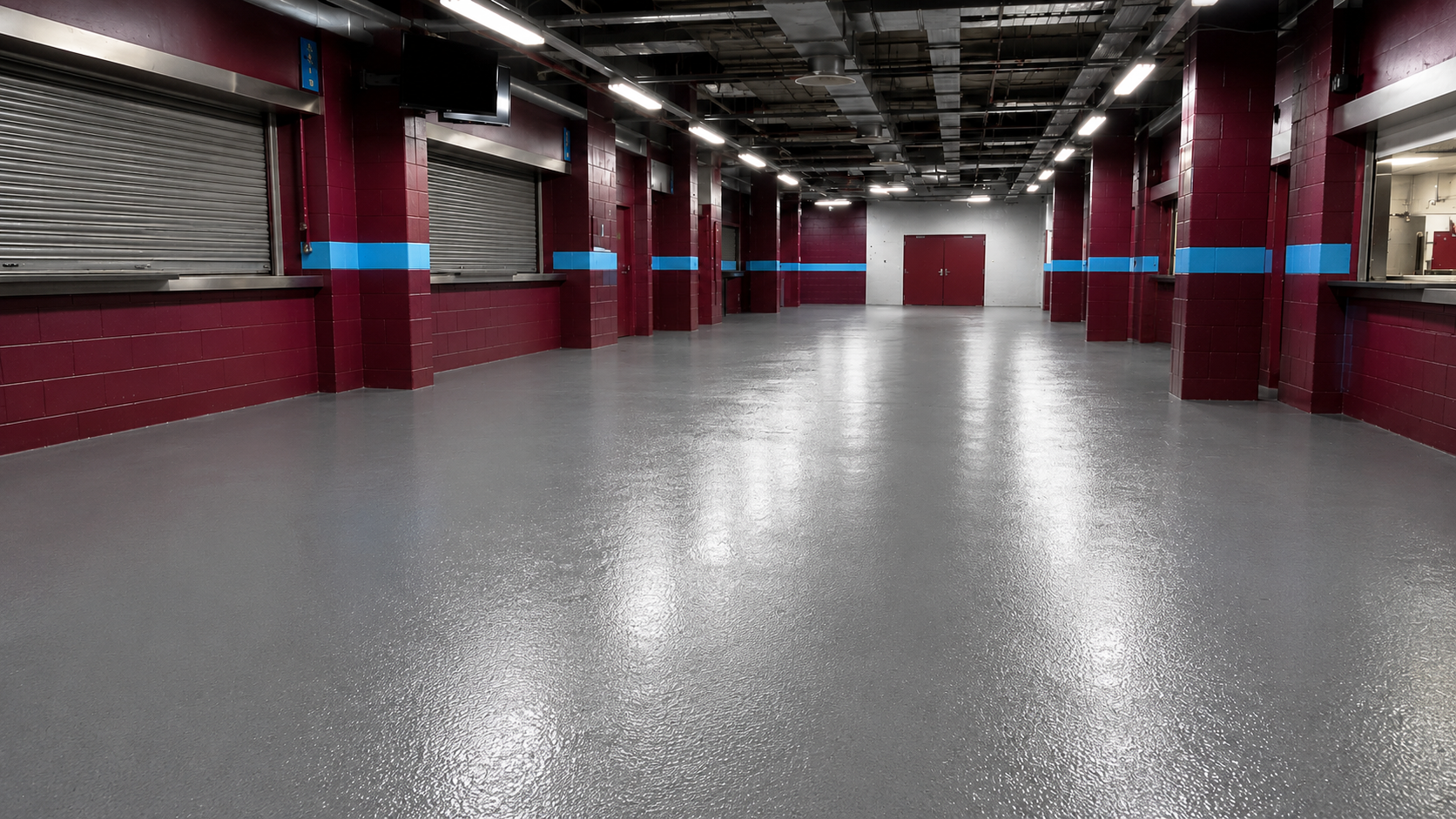
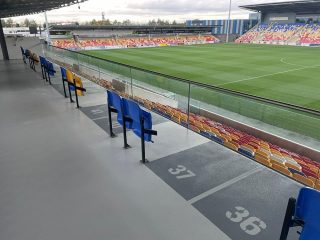
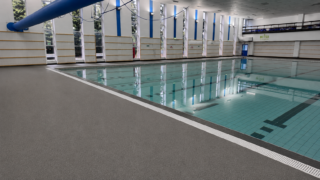
A stadium concourse, leisure changing facilities and wet industrial production areas may all require improved grip, but they should not automatically receive the same flooring system or surface profile.
Zenith Flooring considers pedestrian volume, wheeled traffic, contaminants, cleaning, appearance and expected wear when selecting the most appropriate treatment. This allows busy public-facing spaces to retain a controlled, maintainable finish while more demanding operational areas receive the heavier texture and build-up they require.
Anti-slip resin coatings provide a practical way to improve grip while renewing and protecting an existing concrete or compatible resin floor.
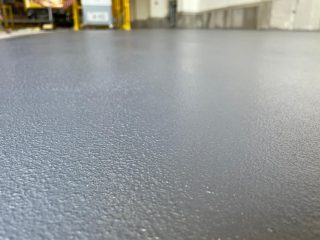
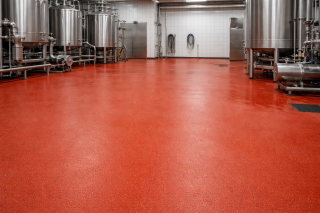
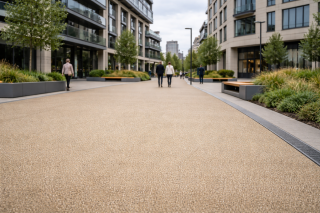
The degree of texture can be controlled to suit the environment. A restrained aggregate finish may be appropriate across entrances, concourses, aisles, circulation routes and back-of-house areas where appearance and ease of cleaning remain important. More pronounced finishes can be installed where water, operational residues or wheeled traffic create a greater risk. The existing floor is mechanically prepared before the resin and selected aggregate are applied, helping the completed coating achieve a reliable bond and consistent finish.
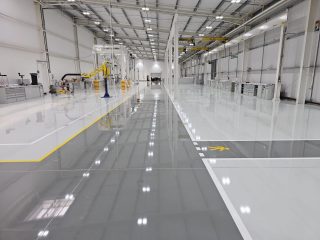
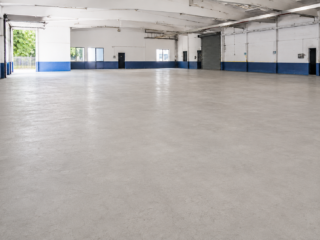
Where frequent contamination, washdown, vehicle movement or intensive operational use is expected, a heavier-duty textured resin system may be more appropriate than a thin anti-slip coating.
These systems provide a robust, continuous surface across service areas, commercial kitchens, processing environments, loading spaces, workshops and other demanding locations. The specification can account for impact, chemicals, temperature, drainage and cleaning as well as slip resistance. Falls, coving and interfaces with channels or fixed equipment can also be incorporated where they form part of the wider flooring package.
Existing ceramic, porcelain and suitable natural stone floors can sometimes be made more slip-resistant without being completely removed. Zenith Flooring’s tile treatment process modifies the microscopic surface characteristics of the tile before the area is neutralised and cleaned. A discreet trial area is completed first to check compatibility and establish the likely effect on appearance and performance.
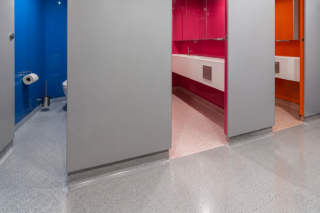
This approach can be suitable for entrances, changing facilities, washrooms, circulation spaces and other tiled areas where replacement would create unnecessary cost or disruption. Zenith’s existing process includes surface preparation, spot testing, treatment and pH neutralisation.
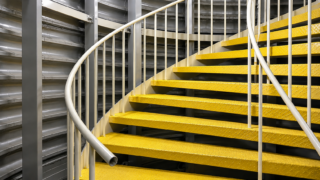
Metal steps, platforms, ramps, walkways and access areas can become slippery through water, oil, dust, surface wear and repeated use. Zenith Flooring applies durable anti-slip resin coatings to suitable steel and metal substrates, improving grip while protecting the existing surface.
The metal is mechanically prepared before a compatible primer, resin coating and graded aggregate are applied. The system can be tailored around foot traffic, wheeled access, contamination, cleaning requirements and whether the area is internal or exposed to the weather.


Every site presents different technical, operational and programme requirements. We start by understanding the environment, the existing condition and the outcome you need, before recommending a flooring or roofing solution that can be delivered safely, efficiently and with lasting performance.
A surface described as anti-slip still has to work as part of the wider environment. In public-facing spaces, that may mean supporting thousands of daily footsteps while remaining presentable, comfortable to walk on and straightforward to clean. In operational areas, it may need to retain grip during washdown, contamination or repeated wheeled traffic.
Zenith Flooring specifies the surface profile around these competing demands. The objective is to introduce enough texture to improve safety in the expected conditions without creating a floor that traps dirt, resists effective cleaning or becomes unnecessarily difficult to use.
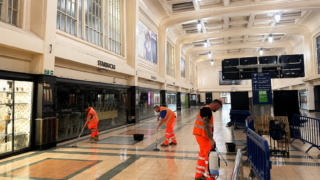
Slip risk is shaped by the combination of surface, contamination, footwear and movement. At a railway station, shopping centre or supermarket, rainwater, polished wear, food and drink spillages and intensive foot traffic may be the dominant concerns. At a commercial kitchen, workshop or processing site, the floor may instead encounter grease, oil, water, fine material or regular washdown.
Zenith reviews the likely conditions alongside pedestrian volumes, gradients, drainage and cleaning methods before recommending the flooring system and level of texture. This ensures that public-facing and industrial areas are each treated according to their actual use rather than forced into the same standard specification.
With resin flooring, slip resistance is commonly created by incorporating aggregate into the installed system. The aggregate remains held within the resin, creating a textured surface rather than relying on a temporary additive applied after completion.
The size and quantity of aggregate, together with the thickness of the surrounding resin, influence the finished texture. A finer finish may be appropriate for predominantly pedestrian areas, while more demanding wet or operational environments may require a more pronounced profile.
The final build-up should balance grip with cleanability. Excessive texture can retain contamination and make cleaning more difficult, while insufficient texture may not provide the required performance when the floor is wet.
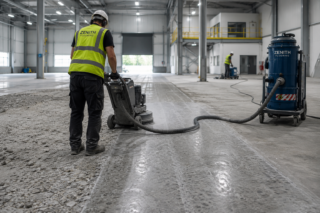
An anti-slip coating will only remain as secure as the surface beneath it. Existing contamination, weak coatings, laitance, damaged concrete and poorly bonded repairs must be addressed before installation. Depending on the floor, Zenith may use diamond grinding, shot blasting or another controlled preparation method to expose a sound substrate and create the profile required by the new system.
Cracks, spalling and local defects can then be repaired before primers, resin and aggregate are applied. Existing tiled surfaces are cleaned and spot-tested before treatment to reduce the risk of an unsuitable reaction or unexpected change in appearance. This preparation forms part of the installed system rather than being treated as an optional preliminary operation.
Slip resistance can change as a floor wears, becomes contaminated or develops a build-up of cleaning residue. The completed surface must therefore be supported by a cleaning process suitable for its texture and the materials encountered in the area. Zenith confirms the relevant curing period and maintenance considerations at handover so that the new surface is not damaged or prematurely placed into use.
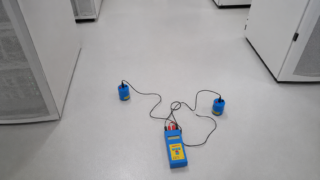
Where a project requires formal slip-resistance verification, the test method and acceptance criteria should be identified within the specification. HSE describes the Pendulum test, used in accordance with BS 7976 and UK Slip Resistance Group guidance, as the preferred method for measuring floor slip resistance.
The best system depends on how the area is used, what may reach the floor and how the surface must be cleaned.
Busy entrances, concourses, supermarkets and shopping centres often require a controlled texture that improves grip without becoming visually intrusive or difficult to maintain. Kitchens, workshops, processing areas and washdown zones may require a heavier-duty resin system with a more pronounced profile.
Zenith Flooring assesses the substrate, traffic, contamination and operational requirements before recommending a coating, textured resin floor or specialist surface treatment.
In many cases, yes. Suitable ceramic, porcelain and natural stone floors can sometimes be treated to improve slip resistance without removing the existing tiles.
The treatment alters the microscopic characteristics of the surface rather than adding a visible coating. Zenith completes a discreet trial area first to confirm compatibility, likely performance and any effect on appearance. The floor is then treated, neutralised and thoroughly cleaned before being returned to use.
This can reduce disruption in entrances, washrooms, changing areas, concourses and other tiled spaces where full replacement would be disproportionate.
The terms are often used interchangeably, but no floor can be guaranteed to prevent every slip in every condition.
“Slip-resistant flooring” is the more accurate description because performance is influenced by the surface texture, contamination, footwear, cleaning and movement. A floor that performs well when dry may behave differently when exposed to rainwater, grease, dust or cleaning residue.
The specification should therefore define the conditions in which the floor is expected to perform rather than relying solely on a product being described as “non-slip”.
Yes. Anti-slip systems can be specified for high-footfall environments including stadium concourses, supermarket entrances, retail aisles, shopping centres and public circulation areas.
These locations usually require a balance between grip, appearance, durability and cleanability. The surface must withstand repeated foot traffic while remaining comfortable to walk on and practical for routine cleaning.
Zenith can adjust the resin system and aggregate profile to suit public-facing areas without automatically applying the heavier texture used in more demanding industrial environments.
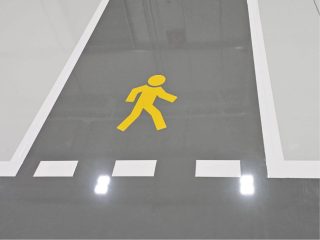
Loose coatings, weak surface material and remnants of previous markings must be addressed where they could affect adhesion or remain visible through the new scheme. The required routes, bays and symbols are then measured, set out and masked before the marking material is applied.

Slip resistance can be assessed using recognised test methods, with the pendulum test commonly used in the UK to measure the slip potential of flooring.
Testing should reflect the expected conditions wherever possible, including whether the surface will normally be dry, wet or exposed to a specific contaminant. The required test method and acceptance criteria should be agreed before installation where documented performance is part of the specification.
A numerical result should still be considered alongside gradients, drainage, cleaning, footwear and the wider management of the area.
No. A more aggressive texture can improve grip in certain wet or contaminated conditions, but it may also become harder to clean and less suitable for trolleys, wheeled equipment or large volumes of pedestrian traffic.
The correct finish is the one that provides sufficient slip resistance for the identified risk while remaining practical in daily use. Public-facing spaces often need a finer, more controlled profile, while washdown areas, kitchens and operational environments may require a coarser surface.
Zenith selects the texture around the actual conditions rather than specifying the roughest available finish.
Installation time depends on the floor area, substrate condition, preparation requirements and selected system.
A tile treatment or localised coating may be completed within a comparatively short closure period, while a full textured resin floor involving mechanical preparation and concrete repairs will require a longer programme. Temperature and curing conditions also affect when the surface can accept foot or vehicle traffic.
Zenith will confirm the installation sequence, curing period and expected return-to-service time within the project proposal.
Zenith Flooring installs epoxy, polyurethane and polyaspartic resin flooring systems for commercial and industrial environments across the UK. Our resin coatings and screeds are specified around substrate condition, traffic, impact, chemical exposure, hygiene and curing requirements to deliver a durable, compliant floor with minimal operational disruption.
Zenith Flooring delivers commercial and industrial floor levelling using pumped cementitious screeds and specialist levelling compounds. Selected around the substrate condition, loading, finish and programme requirements, our self-smoothing, fast-drying systems create a durable, even surface for new floors, refurbishment projects or preparation ahead of further flooring installation.
Zenith Flooring provides commercial and industrial floor preparation and concrete repair services, including diamond grinding, vacuum shot blasting, scarifying and scabbling. From removing coatings and weak surface material to repairing cracks, spalled concrete and damaged joints, we create a sound substrate for new flooring systems and restore existing floors to service.
Zenith Flooring delivers durable internal and external line marking for warehouses, factories and commercial sites. From pedestrian walkways and safety zones to loading bays, traffic routes and directional markings, we create clear, hard-wearing layouts that improve site safety, organisation and operational efficiency.
Zenith Flooring installs specialist anti-slip treatments and resin systems that improve safety across commercial and industrial environments. Suitable for tiles, concrete, metal and timber, our professionally applied solutions create durable, slip-resistant surfaces for workplaces, public areas and other high-risk locations.
Zenith Flooring installs durable resin flooring systems for stadiums, arenas and major sporting venues. From high-traffic concourses and public areas to kitchens, toilets and plant rooms, we provide slip-resistant finishes, rapid-curing options and clear line marking designed for safety, durability and minimal disruption.
Zenith Flooring installs durable resin bound surfacing for commercial forecourts, pathways, public spaces and pedestrian areas. Combining natural aggregate with a specialist resin, these seamless surfaces provide an attractive, low-maintenance and hard-wearing finish with effective drainage for high-footfall environments.
Zenith Flooring installs electrostatic discharge flooring for environments in which uncontrolled static can affect sensitive equipment, components or processes. Our conductive and static-dissipative resin systems are specified around the project’s electrical-performance criteria, substrate condition, operational demands and wider ESD control plan.
Zenith Flooring seals and dustproofs concrete floors across commercial, public and industrial buildings throughout the UK. Clear sealers, penetrating densifiers and light-duty resin floor seals can reduce surface dusting, make exposed concrete easier to maintain and improve its appearance where a heavier duty system is not required.
Zenith Flooring installs decorative quartz resin systems across floors and walls throughout commercial and public environments. Combining coloured quartz aggregate with a compatible resin build-up creates a durable, seamless and slip-resistant finish suited to leisure centres, pool surrounds, changing facilities and washrooms.
Zenith Flooring delivers lease-end floor removal, repair and reinstatement works across commercial and industrial properties throughout the UK. We can remove tenant-installed finishes and markings, repair the exposed concrete and reinstate the floor to the condition required for handover, reletting or refurbishment.
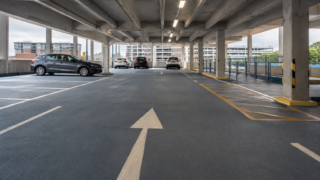
Zenith Flooring installs and refurbishes trafficable resin deck systems across multi-storey car parks, parking structures and private commercial facilities throughout the UK. Our scope can include coating removal, deck preparation, local concrete repairs, waterproof membranes, wearing surfaces and final demarcation.
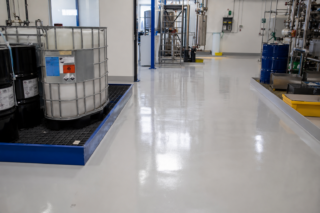
Zenith Flooring installs seamless resin floors and protective bund linings for commercial and industrial environments exposed to chemicals. Our scope can include coating removal, concrete repairs, mechanical preparation, floor and wall linings, upstands, sumps and detailed containment interfaces.
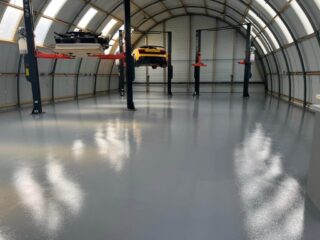
Zenith Flooring installs resin flooring throughout dealerships, workshops, MOT centres, fleet facilities and vehicle-maintenance environments across the UK. From seamless customer-facing floors to hard-wearing workshop coatings. Systems are specified around environment requirements and time available for maintenance.
Zenith Flooring installs and refurbishes resin floors for stores, supermarkets, showrooms, shopping centres and wider retail developments across the UK. We coordinate floor preparation, repairs, levelling and the final resin system around fit-out programmes from customer-facing sales floors and entrances to stockrooms and service corridors.
Zenith Flooring installs hygienic resin flooring for food and drink production facilities across the UK. From wet processing to bakeries, dairies, breweries, commercial kitchens, packing halls and cold-storage environments, each floor is specified around cleaning, temperature, chemicals, traffic, drainage and the available production window.
Tell us a little about your project and the service you require. A member of the Zenith team will review your enquiry and contact you to discuss the next steps.
© 2026 Zenith Group. All rights reserved.
Zenith Flooring Limited and Zenith Roofing Services Limited are part of the Zenith Group.