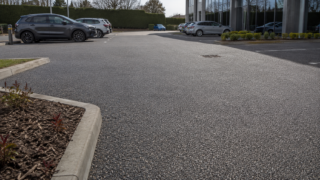
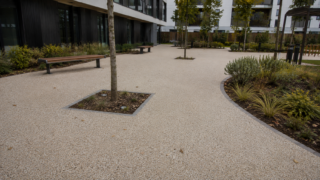
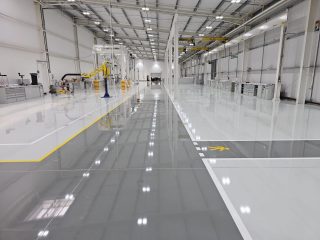
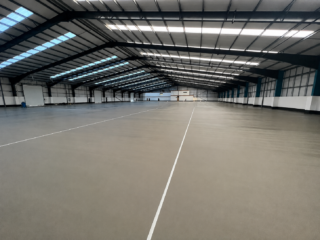
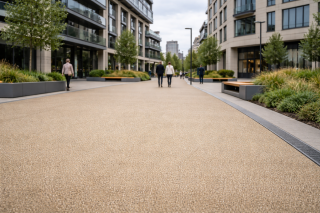
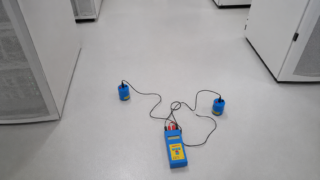
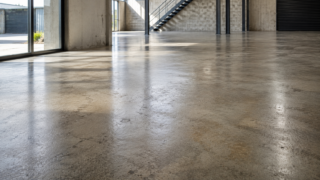
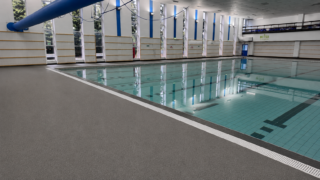
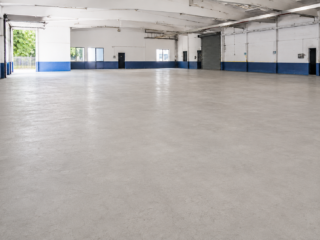
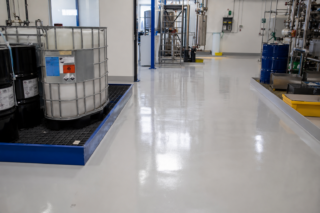
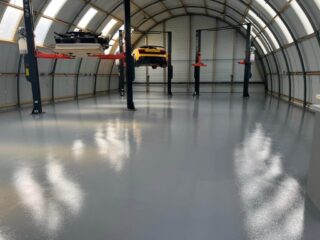
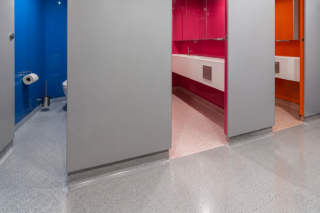
Zenith Flooring installs durable resin bound surfacing across commercial developments, public spaces, landscaped environments and private estates throughout the UK. Natural aggregates are combined with a specialist resin binder to create a continuous, attractive surface for pathways, courtyards, entrances, forecourts, parking areas and external circulation routes. Each installation is designed around the substrate, anticipated traffic, drainage requirements and architectural finish.

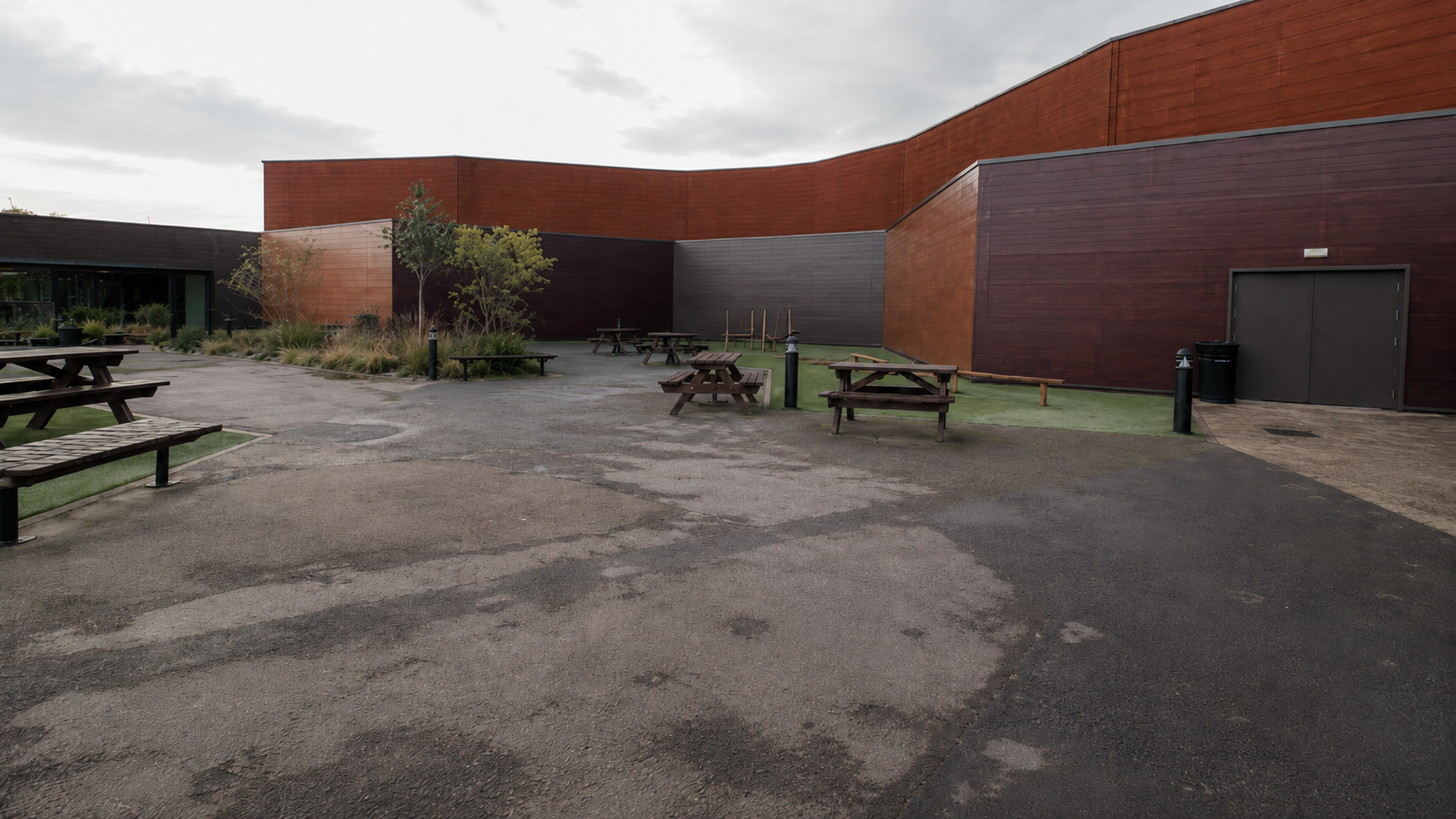
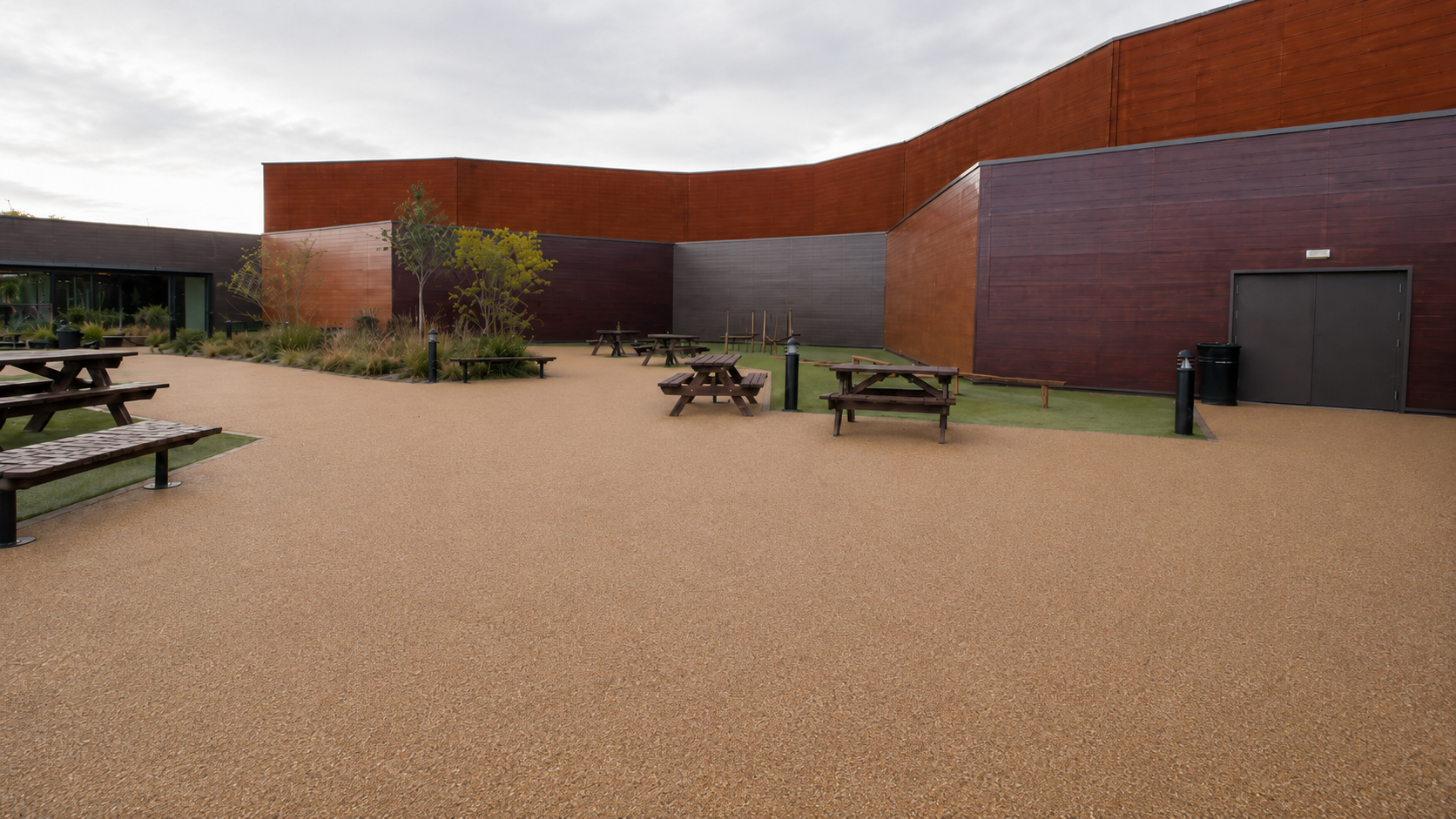
Existing tarmac, concrete and paved areas can become patched, visually inconsistent or poorly integrated with the surrounding development. Loose gravel may suit the appearance of a scheme but can migrate under foot or wheel traffic, while conventional paving introduces joints that interrupt the finished surface. Resin bound surfacing combines natural aggregate and resin before the material is laid and hand-finished as one continuous layer. The aggregate remains visible throughout the surface, creating the appearance of loose stone without leaving individual particles free to move under normal use.
Zenith Flooring assesses the existing construction before determining whether it can receive an overlay or requires a new base build-up. Surface condition, levels, drainage, edges, movement joints and anticipated loading are considered before the resin and aggregate blend is selected.
The result is a cohesive external finish that can connect entrances, pathways, courtyards and surrounding landscape areas without making each space feel like a separate paving scheme.
A landscaped footpath and a trafficked commercial forecourt may share the same aggregate appearance, but the construction beneath them should not be assumed to be identical.
Zenith Flooring develops the resin bound specification around the intended use, base construction, drainage strategy and detailing of each area. Aggregate blend, installation depth and complete build-up can therefore be coordinated across the development while responding to different loading conditions.
Resin bound surfacing provides a smooth, continuous finish for pathways, entrances, pedestrian precincts, courtyards, campuses and external circulation areas. The natural aggregate appearance can complement both contemporary and traditional architecture, while the absence of loose stone makes the surface suitable for areas experiencing regular footfall, pushchairs, wheelchairs and wheeled pedestrian traffic.
Borders, contrasting zones and changes in aggregate blend can be incorporated to define routes or distinguish adjoining areas without introducing a completely different paving material.
Resin bound systems can be installed across suitable commercial forecourts, private access routes, parking areas and other spaces exposed to cars and light vehicles. The base and installation depth must be designed for the anticipated loading rather than relying on the resin bound layer to compensate for movement or weakness beneath it. Existing asphalt or concrete may be suitable for an overlay following inspection, while new-build schemes can incorporate an appropriate purpose-designed base.
Commercial resin bound systems are available with independently assessed resistance to pedestrian and vehicle traffic when installed within their certified design conditions.
Resin bound aggregate can connect hard landscaping with planted areas across courtyards, terraces, communal spaces, tree pits and landscaped developments. The material can be installed around curves, street furniture, planters and other detailed interfaces more freely than conventional rectangular paving units. Different aggregates, borders and bespoke colour combinations can also be used to respond to the surrounding landscape or architectural palette.
Tree pits and specialist landscape applications require their own build-up and detailing so that the surfacing supports the intended drainage, root environment and maintenance strategy.


Every site presents different technical, operational and programme requirements. We start by understanding the environment, the existing condition and the outcome you need, before recommending a flooring or roofing solution that can be delivered safely, efficiently and with lasting performance.
The visible aggregate surface represents the final layer of the installation. Its long-term condition depends on the stability, drainage and detailing of the complete build-up beneath it. Zenith Flooring assesses existing bases and project specifications before confirming the installation method. Preparation, local repairs, edge restraints and drainage interfaces can then be coordinated with the resin bound works rather than addressed after the finished surface has been laid.
Resin bound surfacing is not intended to bridge an unstable or extensively cracked substrate.
Existing asphalt and concrete must be inspected for movement, weakness, contamination and defects that could transfer through the new finish. Loose material is removed, suitable repairs are completed and the surface is prepared before installation begins. Existing joints may also need to be reflected through the resin bound layer rather than concealed.
Where a new construction is required, the base must be designed around the intended pedestrian or vehicle loading and the project’s drainage strategy. FeRFA’s external resin bound guidance covers installation over suitable concrete, asphalt concrete and hot-rolled asphalt substrates.
Resin bound aggregate contains interconnected voids that allow water to pass through the finished layer. However, the surface should not automatically be described as a complete permeable or SuDS solution without considering what lies below it.
A fully permeable scheme requires compatible base and sub-base layers together with an appropriate route for water to infiltrate, attenuate or discharge. Installing resin bound surfacing over impermeable concrete does not, by itself, make the complete construction permeable.
Current national SuDS standards emphasise managing surface water through the complete development drainage design rather than considering an individual surface material in isolation.
The selected aggregate is measured and mixed with the resin binder before being distributed across the prepared surface and finished by hand. Batch proportions, aggregate condition, mixing time and working sequence must remain consistent throughout the installation. Variations can affect colour, texture, curing and the appearance of joins between adjoining batches.
Zenith plans the working areas and batch sequence before application so that the installation can progress continuously between agreed edges, joints and natural stopping points. UV-stable resin systems can be specified where retaining the appearance of lighter or more colour-sensitive aggregate blends is important.
The quality of a resin bound installation is often most visible at its interfaces. Door thresholds, drainage channels, kerbs, paving transitions, service covers, columns and planted areas must be established before the material is laid. Suitable edge restraints contain the resin bound layer and create a defined line against adjoining surfaces.
Falls and levels are coordinated so that water is not directed towards entrances or allowed to collect at poorly resolved transitions. Covers and access points remain serviceable, while different aggregate blends and borders can be separated using appropriate edging details.
With resin bound surfacing, the aggregate and resin are mixed together before being laid and hand-finished as a continuous layer. This creates a comparatively smooth surface with no loose stone and interconnected voids through which water can pass.
With resin bonded surfacing, resin is applied to the base before loose aggregate is scattered across it. The finish is generally rougher, and the complete surface is not normally permeable. Zenith specialises in resin bound systems for commercial, landscape and selected vehicular applications.
The resin bound layer itself is porous, but the complete construction is only permeable when the base and sub-base also allow water to drain through them.
Installing resin bound aggregate over impermeable concrete or asphalt does not automatically create a fully permeable SuDS system. Drainage, falls, infiltration and discharge requirements should therefore be considered across the complete build-up rather than judged from the surface material alone.
Yes. Resin bound systems can be used for commercial forecourts, private access roads, parking bays and areas exposed to cars or light vehicles when the complete construction is designed for the expected loading.
The existing base must be stable and suitable for an overlay, or a new base must be constructed to the required specification. The resin bound layer should not be expected to compensate for movement, cracking or weakness beneath it.
Suitable concrete and asphalt surfaces can often receive resin bound surfacing following inspection and preparation.
The base should be sound, stable and free from contamination, loose material and significant movement. Cracks, damaged areas, drainage defects and unsuitable joints may need to be repaired or reflected through the new surface. Where the existing construction is not suitable, partial or complete replacement may be required before installation.
Yes. A correctly installed resin bound surface provides a continuous finish without loose gravel, making it suitable for paths, entrances, courtyards and other areas used by pedestrians, wheelchairs and pushchairs.
Gradients, transitions, drainage channels, covers and adjoining paving must still be detailed carefully. Accessibility depends on the wider route design as well as the surface material itself.
Routine maintenance generally involves sweeping and periodic washing to remove dirt, leaves and organic material from the surface.
Spillages should be cleaned promptly, while weeds or moss should be addressed before they become established. Pressure washing may be appropriate when carried out using a suitable setting and technique that does not damage the resin or dislodge aggregate. The maintenance approach should reflect the traffic, surrounding landscape and exposure of the area.
Cost depends on the total area, aggregate selection, installation depth, traffic requirements and condition of the existing base. Excavation, new base construction, drainage, edge restraints, repairs and detailed work around covers or landscape features can also affect the quotation.
Providing site drawings, approximate areas, photographs and information about the intended pedestrian or vehicle use will help Zenith Flooring establish the likely build-up before completing a project assessment.

Zenith Flooring installs epoxy, polyurethane and polyaspartic resin flooring systems for commercial and industrial environments across the UK. Our resin coatings and screeds are specified around substrate condition, traffic, impact, chemical exposure, hygiene and curing requirements to deliver a durable, compliant floor with minimal operational disruption.
Zenith Flooring delivers commercial and industrial floor levelling using pumped cementitious screeds and specialist levelling compounds. Selected around the substrate condition, loading, finish and programme requirements, our self-smoothing, fast-drying systems create a durable, even surface for new floors, refurbishment projects or preparation ahead of further flooring installation.
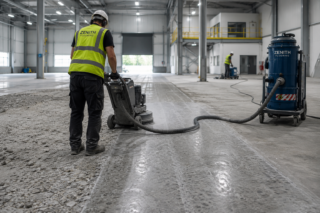
Zenith Flooring provides commercial and industrial floor preparation and concrete repair services, including diamond grinding, vacuum shot blasting, scarifying and scabbling. From removing coatings and weak surface material to repairing cracks, spalled concrete and damaged joints, we create a sound substrate for new flooring systems and restore existing floors to service.
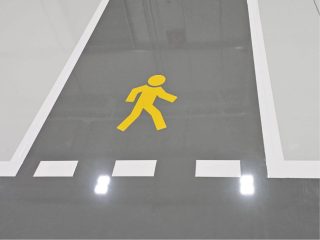
Zenith Flooring delivers durable internal and external line marking for warehouses, factories and commercial sites. From pedestrian walkways and safety zones to loading bays, traffic routes and directional markings, we create clear, hard-wearing layouts that improve site safety, organisation and operational efficiency.
Zenith Flooring installs specialist anti-slip treatments and resin systems that improve safety across commercial and industrial environments. Suitable for tiles, concrete, metal and timber, our professionally applied solutions create durable, slip-resistant surfaces for workplaces, public areas and other high-risk locations.
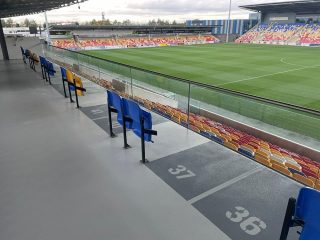
Zenith Flooring installs durable resin flooring systems for stadiums, arenas and major sporting venues. From high-traffic concourses and public areas to kitchens, toilets and plant rooms, we provide slip-resistant finishes, rapid-curing options and clear line marking designed for safety, durability and minimal disruption.
Zenith Flooring installs durable resin bound surfacing for commercial forecourts, pathways, public spaces and pedestrian areas. Combining natural aggregate with a specialist resin, these seamless surfaces provide an attractive, low-maintenance and hard-wearing finish with effective drainage for high-footfall environments.
Zenith Flooring installs electrostatic discharge flooring for environments in which uncontrolled static can affect sensitive equipment, components or processes. Our conductive and static-dissipative resin systems are specified around the project’s electrical-performance criteria, substrate condition, operational demands and wider ESD control plan.
Zenith Flooring seals and dustproofs concrete floors across commercial, public and industrial buildings throughout the UK. Clear sealers, penetrating densifiers and light-duty resin floor seals can reduce surface dusting, make exposed concrete easier to maintain and improve its appearance where a heavier duty system is not required.
Zenith Flooring installs decorative quartz resin systems across floors and walls throughout commercial and public environments. Combining coloured quartz aggregate with a compatible resin build-up creates a durable, seamless and slip-resistant finish suited to leisure centres, pool surrounds, changing facilities and washrooms.
Zenith Flooring delivers lease-end floor removal, repair and reinstatement works across commercial and industrial properties throughout the UK. We can remove tenant-installed finishes and markings, repair the exposed concrete and reinstate the floor to the condition required for handover, reletting or refurbishment.
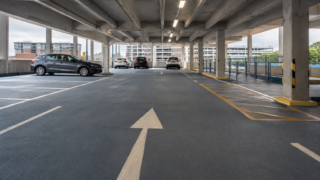
Zenith Flooring installs and refurbishes trafficable resin deck systems across multi-storey car parks, parking structures and private commercial facilities throughout the UK. Our scope can include coating removal, deck preparation, local concrete repairs, waterproof membranes, wearing surfaces and final demarcation.
Zenith Flooring installs seamless resin floors and protective bund linings for commercial and industrial environments exposed to chemicals. Our scope can include coating removal, concrete repairs, mechanical preparation, floor and wall linings, upstands, sumps and detailed containment interfaces.
Zenith Flooring installs resin flooring throughout dealerships, workshops, MOT centres, fleet facilities and vehicle-maintenance environments across the UK. From seamless customer-facing floors to hard-wearing workshop coatings. Systems are specified around environment requirements and time available for maintenance.
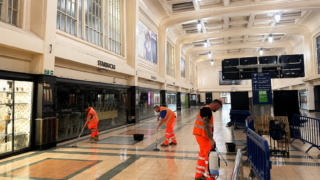
Zenith Flooring installs and refurbishes resin floors for stores, supermarkets, showrooms, shopping centres and wider retail developments across the UK. We coordinate floor preparation, repairs, levelling and the final resin system around fit-out programmes from customer-facing sales floors and entrances to stockrooms and service corridors.
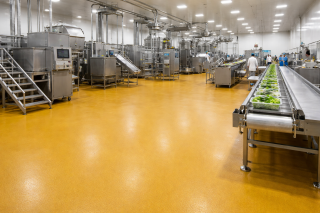
Zenith Flooring installs hygienic resin flooring for food and drink production facilities across the UK. From wet processing to bakeries, dairies, breweries, commercial kitchens, packing halls and cold-storage environments, each floor is specified around cleaning, temperature, chemicals, traffic, drainage and the available production window.
Tell us a little about your project and the service you require. A member of the Zenith team will review your enquiry and contact you to discuss the next steps.
© 2026 Zenith Group. All rights reserved.
Zenith Flooring Limited and Zenith Roofing Services Limited are part of the Zenith Group.